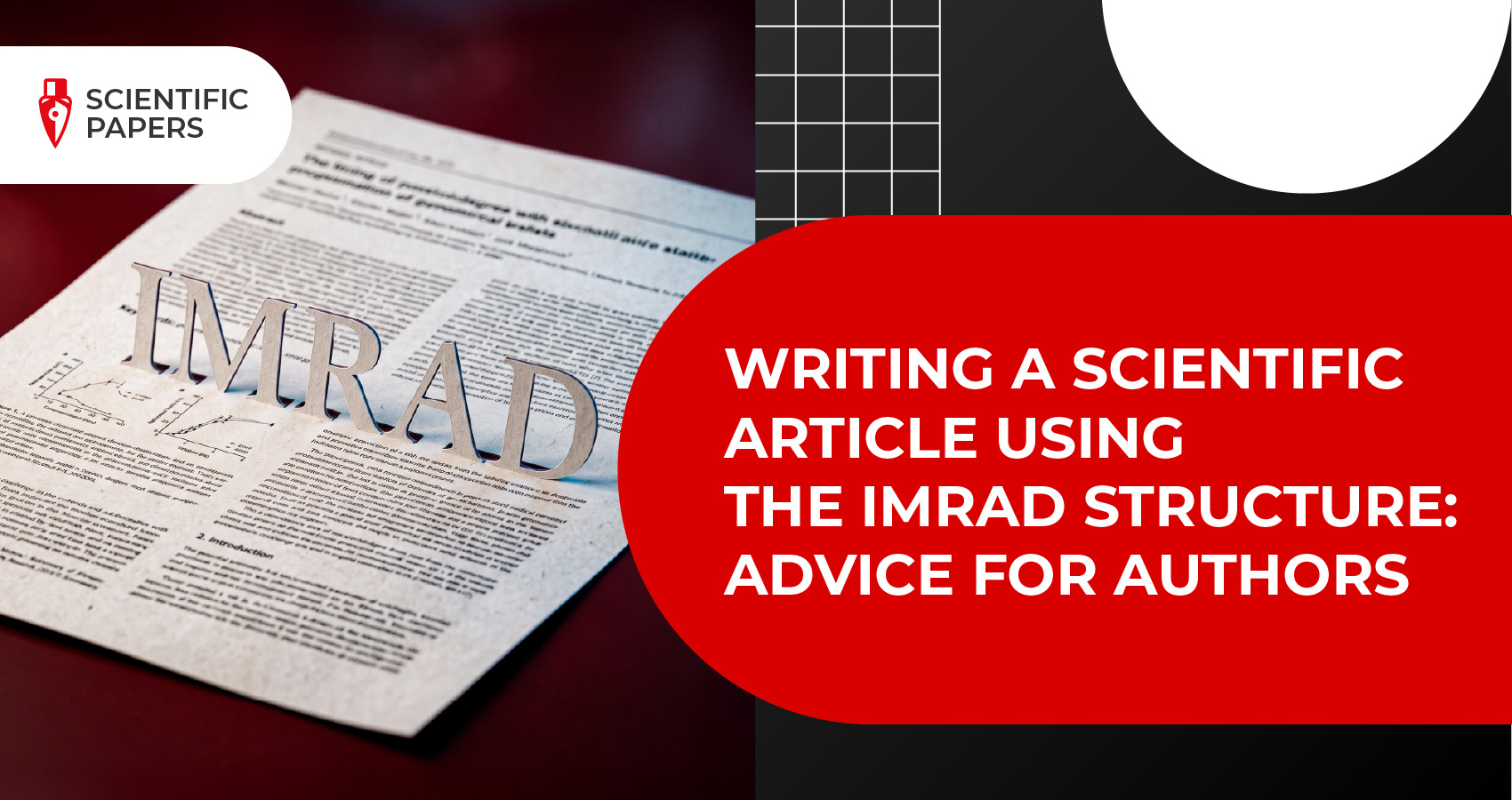
Preparing a scientific article is a responsible and important stage in a scientist’s work that requires particular attention to the content and formatting of the material. Compliance of the manuscript with the established requirements is one of the key aspects considered by the editorial team during its review. The most common format for structuring a scientific article, followed by the vast majority of scientific journals, is the IMRAD structure.
Why does the correct formatting of a scientific article matter?
When reviewing a manuscript, reviewers pay attention not only to the scientific content of the research, but also to the correctness of its formatting. If the article does not comply with the requirements of a particular journal, it may be returned to the author for revision, which can significantly extend the publication process, or it may be rejected.
Proper formatting demonstrates the author’s responsible approach to preparing the material and their familiarity with the journal’s editorial standards. In addition, a properly structured text makes information easier to understand, simplifies the work of reviewers and increases the chances of successful acceptance of the article.
Common requirements of scientific journals for article formatting:
- academic translation into a foreign language
- a clear structure of the work, most often according to the IMRAD model
- correct formatting of citations according to APA, Chicago, Vancouver or another established style
- standardised formatting of tables, figures, diagrams and other graphical materials
How to prepare an article according to the IMRAD structure?
As already noted, a significant number of scientific journals use the IMRAD structure, the name of which is formed from Introduction, Methods, Results, Discussion. It involves the sequential division of a scientific paper into the following main sections:
- Introduction. In this section, it is necessary to justify the relevance of the chosen topic and outline the research problem. It is also necessary to present the hypothesis and define the scientific novelty of the work. At the same time, the Introduction should not be overloaded with an excessive review of sources: the literature used should be up to date and directly relevant to the research topic. If it is necessary to analyse a significant number of literature sources for the work, it is advisable to place them in a separate “Literature Review” section located after the Introduction.
- Methods. Here, the author should describe in detail the methods, approaches and materials used during the research. It is also necessary to indicate the literature base of the work, the statistical data used and the ethical standards that were observed during the research.
- Results. This section should consistently present the results obtained in accordance with the chosen methodology. For a clearer presentation of information, it is advisable to use tables, diagrams, figures and other graphical materials that help the reader better understand the data obtained.
- Discussion. In this section, it is necessary to compare the results obtained with the conclusions of other researchers who have worked on a similar topic. The differences and common features of the methods used should be analysed, the data obtained should be compared, and possible directions for further research should also be outlined.
Following the IMRAD structure helps to organise the material logically, systematise scientific information and make it easier for the reader to navigate the research text.
What should you pay attention to when formatting a scientific article?
1. Requirements of the scientific journal
Each scientific journal establishes its own rules for the preparation and formatting of manuscripts. These can usually be found on the journal’s official website. However, authors sometimes ignore these requirements: they use a different citation style, fail to follow the required structure or incorrectly format the article metadata, including the abstract and keywords.
For the editorial team, such errors may indicate insufficient attention by the author to the preparation of the manuscript and significantly increase the risk of the work being rejected.
2. Citation
One common mistake is the simultaneous use of several citation styles in a single reference list. Most scientific journals require the consistent use of one established style, such as APA, Chicago or Vancouver.
Another important aspect is self-citation. Authors may refer to their own previous publications to support individual points; however, excessive use of such sources is not always justified. A high level of self-citation may negatively affect the perception of the scientific objectivity and originality of the results obtained, so this indicator may also be checked by reviewers. The recommended level of self-citation is 10-12%.
3. Formatting the reference list
When preparing a bibliography, authors often use different styles for formatting sources, fail to provide DOIs or make inaccuracies in the spelling of authors’ surnames. Another problem may be the use of outdated sources that no longer fully reflect the current state of the research topic.
For this reason, most scientific journals require that at least 50% of the bibliography consist of sources published within the last three years.
A properly formatted scientific article simplifies and speeds up the process of its review by reviewers, contributes to greater confidence in the presented results and creates an image of the author as a responsible and attentive researcher.
Having difficulties writing a scientific article? Contact the company Scientific Papers. Our specialists will help you prepare a high-quality paper in accordance with the relevant requirements. Submit an application on the website, and our manager will contact you shortly. Together towards scientific achievements!