In modern academic practice, the issue of plagiarism in scientific papers is extremely important. This is related to the requirements of academic integrity, the rules and principles of which students, lecturers and researchers must follow. In our article, we will talk about how plagiarism can be avoided in a course paper.
What is plagiarism?
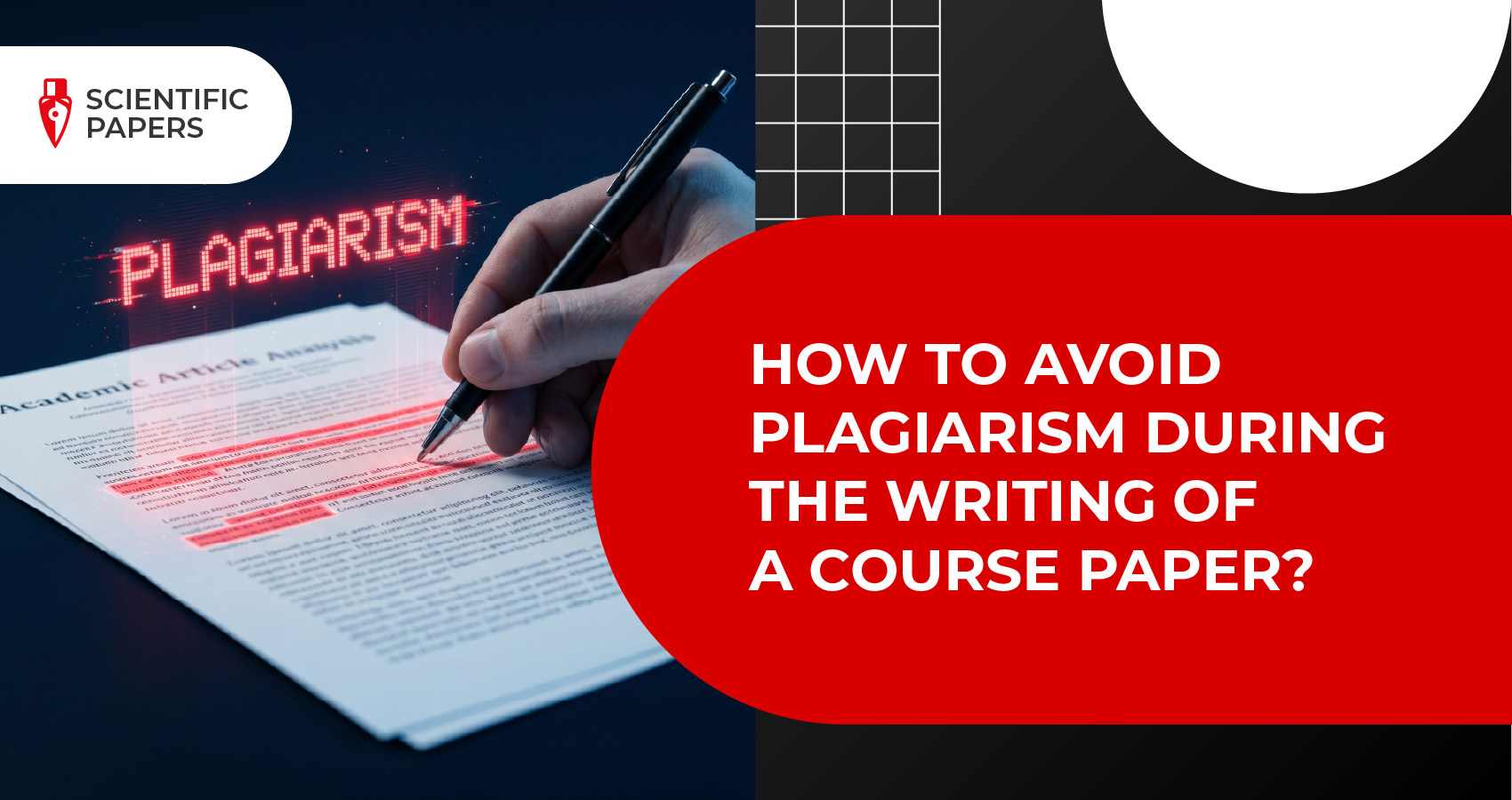
Plagiarism is the use of someone else’s ideas, texts, conclusions, graphic materials or research results without proper reference to the source and author. Plagiarism may include not only direct copying of text, but also paraphrasing someone else’s idea without indicating the source.
How to avoid plagiarism in a course paper?
In order to avoid or reduce the likelihood of plagiarism in a course paper, we recommend following these recommendations:
1. Work with different sources
To avoid plagiarism, you should not base your work on a single source of information. We recommend using several scientific articles, textbooks, monographs, official documents, statistical materials, etc. This will help you explore the topic more deeply and form your own view of the problem.
2. Format quotations correctly
If you use a fragment of text word for word, it must be placed in quotation marks and the source must be indicated. Quotations should be relevant and should not make up too large a part of the text in the paper. It is better to use them for important definitions, outlining the position of another author, key statements, etc.
3. Indicate the source when paraphrasing
Paraphrasing the text of a source is not limited only to replacing several words with synonyms. It is necessary to rethink the information, present it in your own words and preserve the meaning. If the idea belongs to another author, even after paraphrasing, a reference to the source must be indicated.
4. Form your own conclusions
A course paper should cover not only the information you have found in the literature, but also your understanding of the topic. After analysing the sources, it is worth making your own generalisations, comparing the approaches of different authors and explaining why certain information is important for your research.
5. Record the sources used straight away
When writing the paper, it is better to save all the sources you use straight away. This will help you avoid losing important references and correctly format the bibliography. Particular attention should be paid to writing down the author’s surname and name/initials, the title of the work, the year of publication, pages and the link to the electronic source.
6. Check the work before submission
Before submitting the course paper, it is worth checking the text for originality using special services. At the same time, it is important to remember that such a check will not replace proper work with sources. Even a high percentage of originality does not guarantee the complete absence of incorrect borrowings.
Avoiding plagiarism is not just a formal requirement; it demonstrates a responsible attitude to study. If you work with sources in good faith, format references correctly and add your own analysis, your course paper will look professional and meet academic standards.
Have problems with preparing course paper? The company Scientific Papers is ready to help. Our specialists will provide a consultation and prepare a paper that will meet your request and the requirements of your higher education institution within a clearly established deadline. Leave a request on the website, and our manager will contact you shortly and answer all your questions. Opening new scientific horizons together!