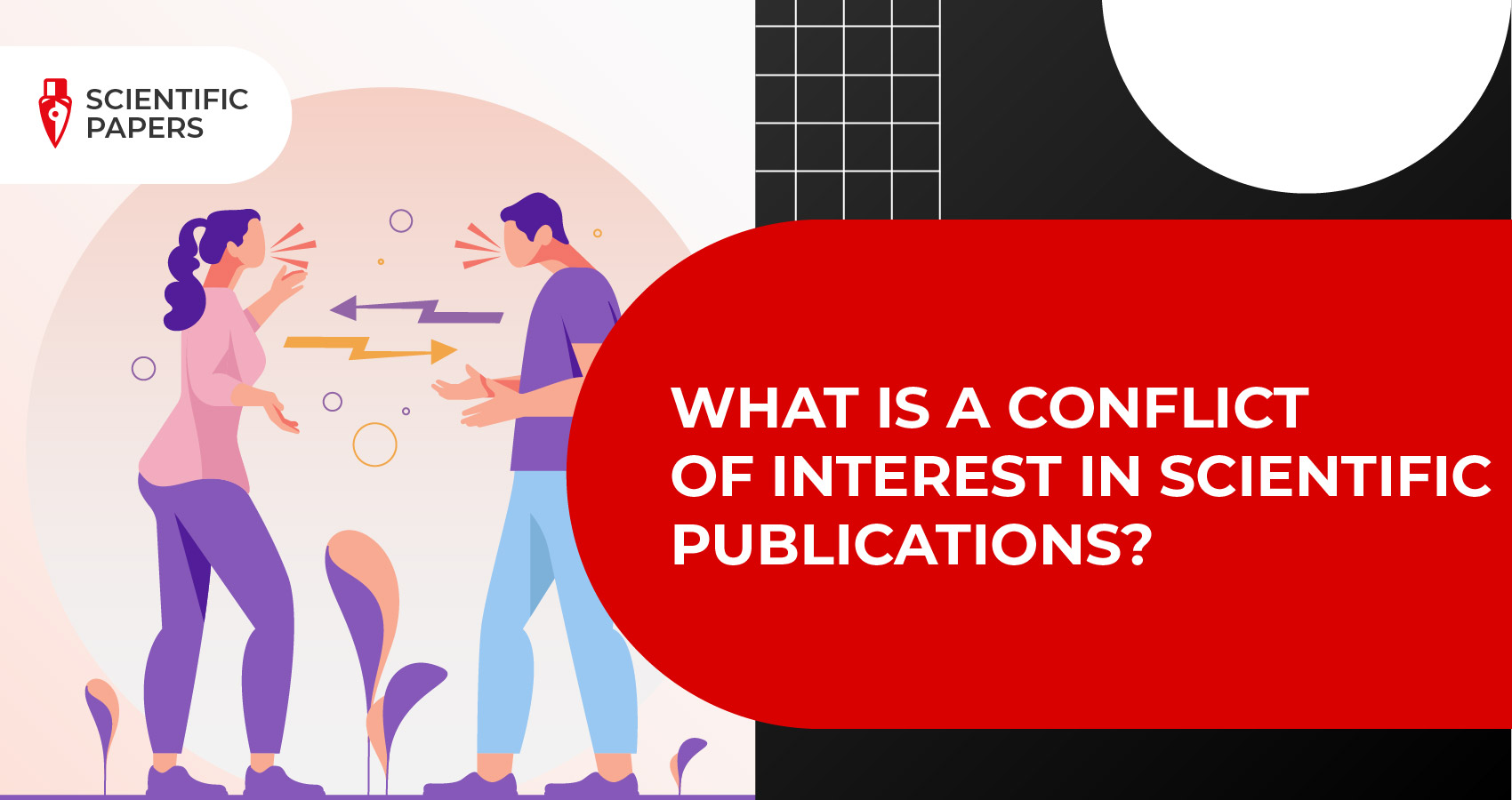
Authors, reviewers, and editors have certain responsibilities regarding the regulation of conflicts of interest in scientific works. When submitting research to a scientific journal or other platform, the editorial board may ask the author to outline any potential circumstances that could affect the impartiality of the evaluation of the work. Today we will talk about what a conflict of interest is and who is involved in it.
What is a conflict of interest?
According to the definition of the Committee on Publication Ethics (COPE), a conflict of interest – is a circumstance that may influence or create the appearance of influencing a person's objectivity and impartiality. They can arise at any stage of scientific activity: planning a study, writing a paper, etc. Such situations can affect the performance of work, analysis of results, and preparation of reports. In the field of publishing, such conflicts can affect the management of the publication process (peer review, editorial decisions on acceptance for publication, etc.).
Types of conflicts of interest in research:
- Personal conflicts of interest arise when personal relationships (family, friends, etc.) may influence the objectivity of decisions.
- Financial conflicts of interest are related to receiving or expecting material benefits, such as grants, fees, or a share of profits.
- Professional conflicts of interest arise when professional duties or career interests may conflict with the independence of scientific judgement.
All participants in the publication process (authors, reviewers and journal editors) must fulfil certain obligations regarding conflicts of interest in publications, which we will discuss in more detail below.
Conflict of interest: responsibilities of authors, reviewers and editors
Authors
When submitting work of any type or volume, authors are responsible for disclosing all financial, personal or other relationships that may affect the objectivity of their work. If there is a conflict of interest in the article, it should be reported at the end of the manuscript under the heading “Conflict of Interest”, indicating:
- any conflicts of interest of the authors
- sources of funding or support, including the names of sponsors and a description of their role (if any)
In most cases, authors indicate ‘None’ in the ‘Conflict of Interest’ section. If the work does not contain the relevant information, it is assumed that there is no conflict of interest. However, in most cases, authors simply indicate ‘None’ in this section.
Reviewers
Before starting the review process, the editorial board asks the reviewer for information about possible conflicts of interest that may influence their assessment. Reviewers are required to inform editors of any circumstances that may affect their impartiality and to decline to review the material if such circumstances exist. They also have no right to use the information obtained during the review for their own benefit or to promote their own research.
Editors and journal staff
Editors who make final decisions on publication should refrain from reviewing materials if they have personal or professional connections that create a potential conflict of interest. Other members of the editorial board should disclose any financial or other interests that may influence their decisions and refrain from participating in the discussion of the relevant research. Editorial staff should not use information obtained while working with manuscripts for any personal or commercial gain.
Open and honest disclosure of conflicts of interest is a manifestation of academic integrity and transparency in scientific activity. It allows maintaining trust in research results, ensures objectivity of evaluation, and enhances the author's reputation in the scientific community.
Are you having difficulties writing a scientific article, dissertation, monograph, or other type of scientific work? Contact the company “Scientific Works”. Our specialists will prepare the material within the time frame you need and in compliance with all relevant requirements. Leave a request on the website and our manager will contact you shortly. Together to scientific achievements!