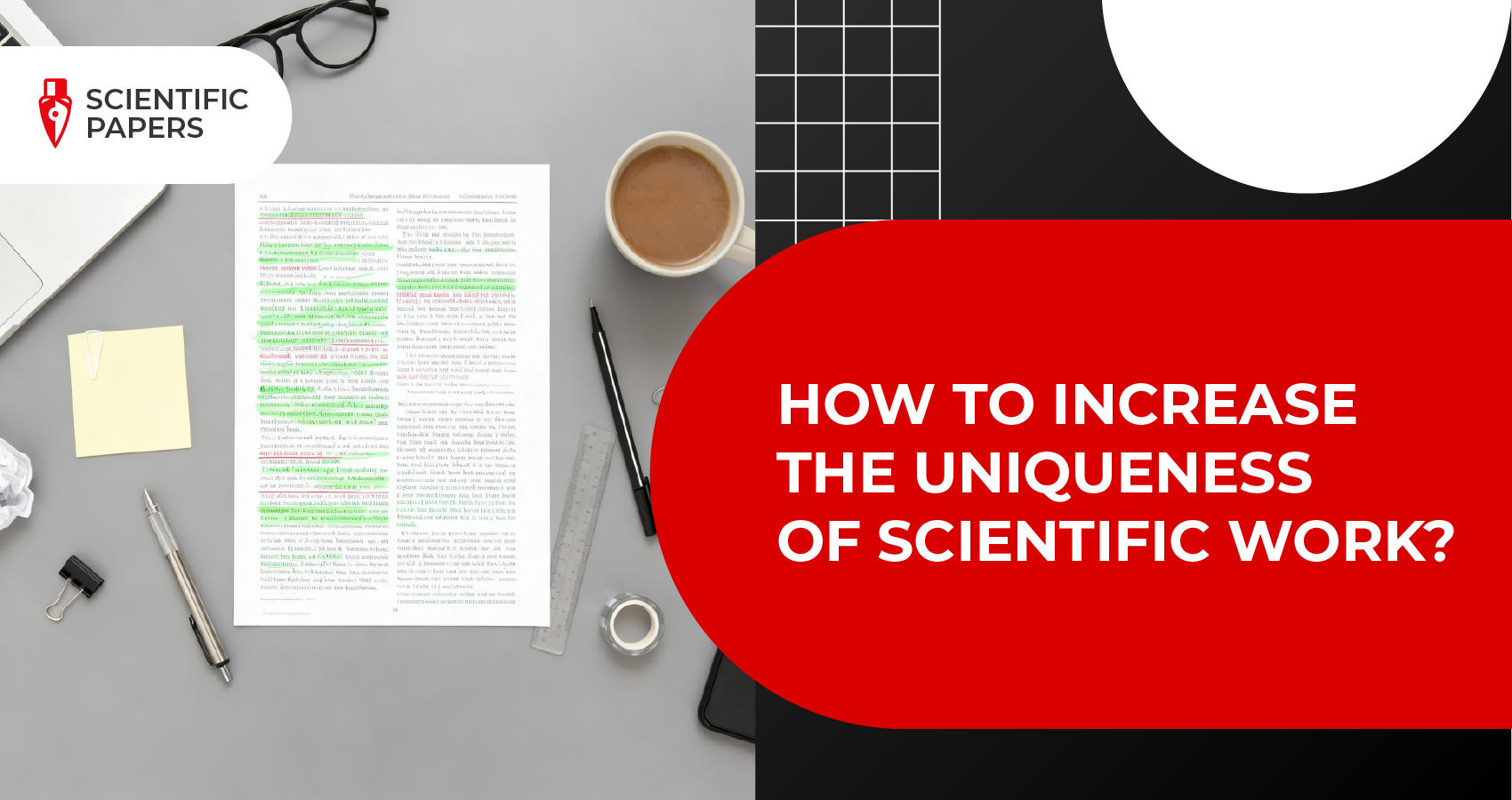
Every scientific study must meet one of the main academic standards – originality. A work that lacks the author’s own perspective and merely interprets the studies of others risks being declined. Today we will look at the main factors that help to improve the originality of your research.
What is the originality of a scientific study?
Originality is a percentage indicator that reflects how much of a research text is unique compared to materials already published online.
Each journal has its own requirements for the acceptable level of originality, but on average, this figure ranges between 75-85%.
Editorial boards of academic journals carefully check submitted papers for originality. If the text does not meet the set criteria, the editors may:
- reject the paper before peer review
- send it back for revision to improve originality
- decline publication
Before submitting your manuscript, make sure to check the originality requirements on the journal’s official website.
What is considered plagiarism in a scientific work?
- paraphrasing without referencing the source
- self-plagiarism
- using data without crediting the original source (figures, empirical or statistical data)
- copying another author’s ideas word-for-word without quotation marks
How to increase the originality of your research?
Wording in the text
Template expressions such as “The relevance of the study lies in…” may be identified by plagiarism-detection software as borrowed text. To avoid this, try to replace clichés with your own analysis and insights, and express your ideas clearly, logically, and in your own authorial style.
Citation standards
Even if a text is fully paraphrased, the absence of proper references is still considered plagiarism. Correct citation demonstrates your academic integrity and respect for the work of other scholars. Use one consistent citation style – for example, APA, Chicago, Harvard, or the format required by the target journal.
Self-citation
Self-citation is an accepted practice, sometimes necessary to expand on previous findings. However, excessive self-citation can reduce the originality and novelty of your paper and negatively affect your academic reputation. The recommended level of self-citation is 10-12%.
A high level of originality in a scientific work reflects the author’s professionalism, respect for academic integrity, and research competence. Taking the originality check seriously will help you avoid unnecessary publication delays.
Having difficulties writing a scientific article, dissertation, monograph, or any other academic work? Contact Scientific Works. Our specialists will prepare your material within the required timeframe and in full accordance with academic standards. Fill in the form on our website, and our manager will contact you shortly. Together towards academic success!