


How to Write a High-Quality Scientific Article
Definition of a Scientific Article
A scientific article is an important form of scientific work that reflects research results and is crucial for the scientific community. It is necessary for scientists to present their discoveries and helps to advance the field of knowledge.
Writing a scientific article is the simplest way for a researcher to demonstrate their expertise in a particular field.
Main Components of a Scientific Article:
-
Introduction: defines the topic, purpose, relevance, and objectives of the research.
-
Materials and Methods: describes the research methods used.
-
Results: presents the obtained research results.
-
Discussion: analyzes the results and discuss them.
-
References: list of used sources.
Scientific Article Overview:
-
Concise title: reflects the main content of the research.
-
Abstract: provided by the author after writing the article. The abstract should contain the topic of the work, its problem, purpose, and results. In addition to Ukrainian, the abstract is provided in Russian and English.
-
Keywords: the researcher indicates keywords after the instruction. Keywords should be translated into Russian and English.
-
Introduction: in the introduction, the author explains the purpose of their research, and the problem, and defines the object. The relevance and novelty of the research, and literature review, are also parts of the introduction.
-
The main part discusses the methods, the research itself, and its results.
-
Conclusion: in the conclusion, the author specifies how they achieved the goal and describes the obtained research result.
Rules for writing an Article:
- Clarity and accessibility: the article should be understandable to the audience.
- Justification: it is important to show the significance of one's work for science.
- Stimulating interest: the article should interest the scientific community.
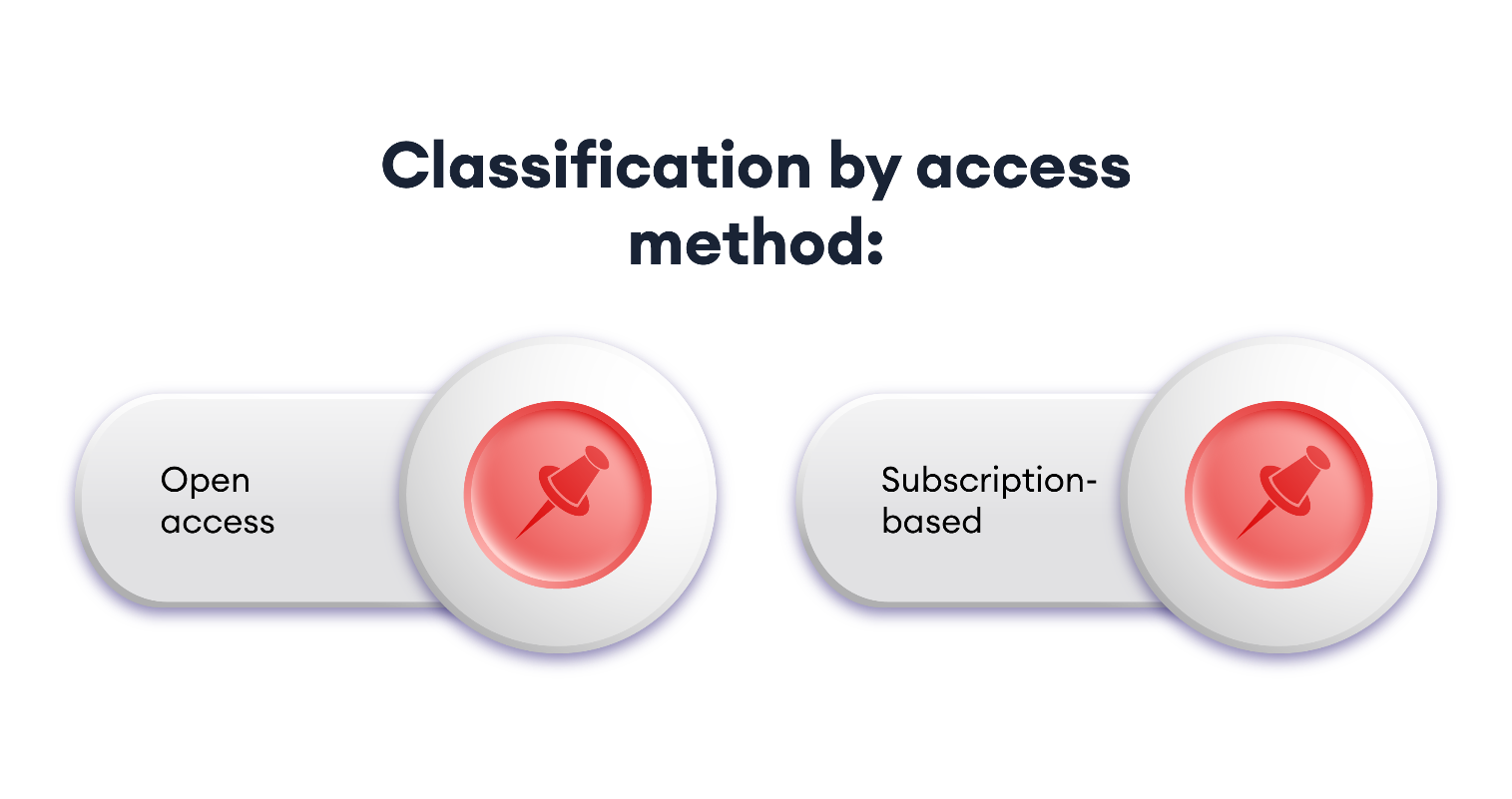
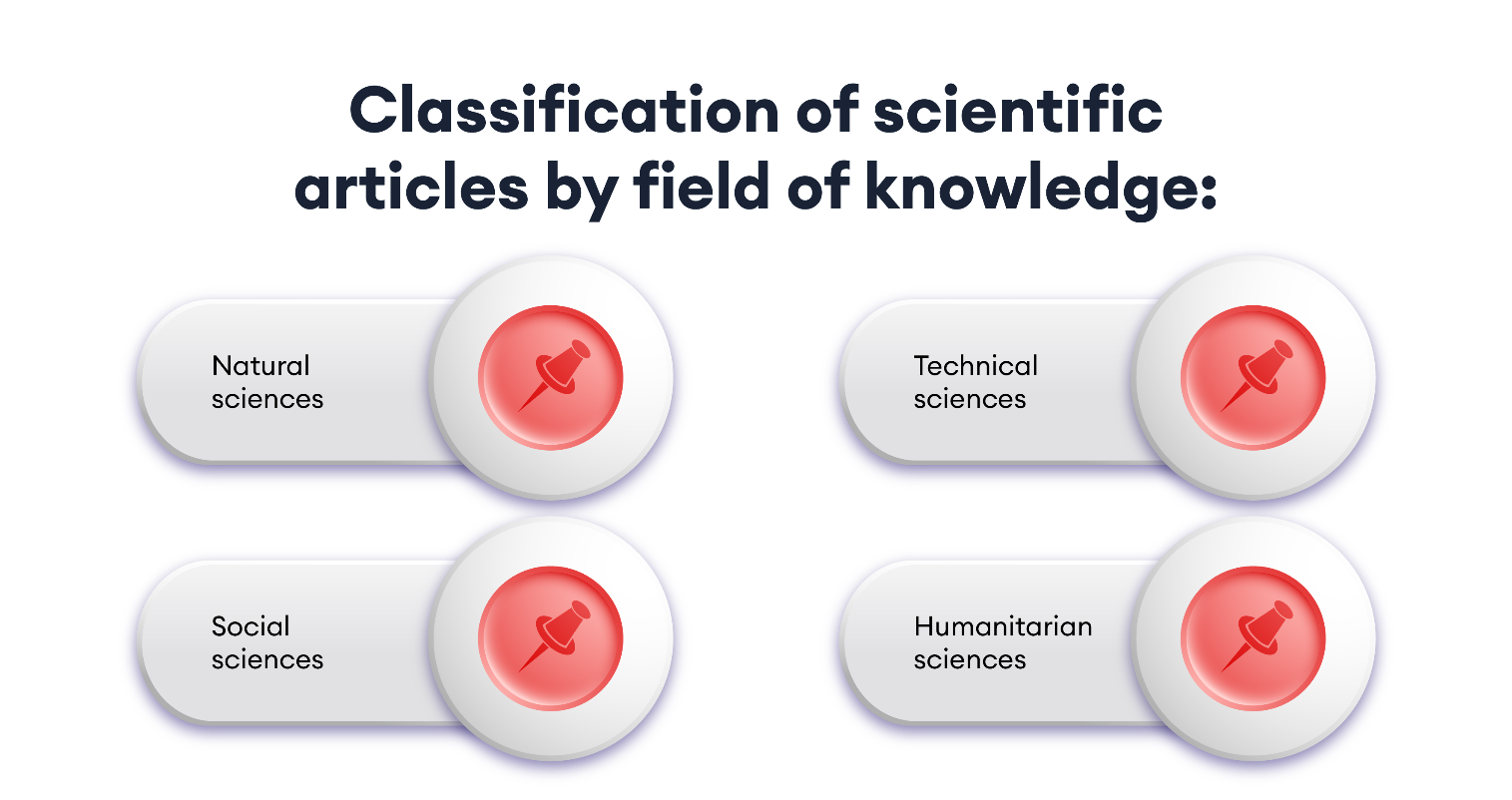
Scientific articles are classified by the type of research, the field of knowledge, method of publication, access, and level of influence.
By type of research, they are distinguished as empirical articles (based on experiments or observations), review articles (analyze the results of published research), and theoretical articles (consider theoretical constructs without practical application).
By the method of publication, conference papers, journal articles, and preprints are distinguished. Preprints are articles that have not yet been peer-reviewed and published. Typically, preprints are used for familiarizing colleagues with the author's ideas and for feedback.
By the level of influence, highly cited articles and articles in leading journals are distinguished (impact factor is considered).
Requirements for formatting articles
How to Write a Quality Article?
The secret of a successful scientific article lies in the meticulous processing of each stage of the writing process. First and foremost, it is important to formulate a scientific hypothesis and identify its components. After conducting research analysis, the hypothesis should be formulated, which is a key step.
At the next stage, it is recommended to familiarize oneself with under-researched aspects of one's field. This information search can be conducted using databases such as Scopus and Web of Science, as well as by studying the works of other researchers.
Afterward, it is important to use the IMRAD structure for formatting the text of the work. It includes the following sections:
- Introduction - defines the main theses, hypotheses, and tasks, with a minimum of 5 references to literature sources.
- Materials and Methods - describes the research process. By citing methods, other researchers can replicate the study.
- Results - describes the obtained research results. The results should be clear and structured; additionally, results can be presented in the form of figures or tables.
- Discussion - analyzes the results and compares them with old data and studies of other scientists. In this section, one can indicate the advantages and disadvantages of the research.
In addition to the structure, it is important to pay attention to the graphical design of the work. This may include converting formulas to LaTeX format and using graphic editors to create visual material. MS Word can be used for formatting tables.
Text formatting and structuring (paragraph division) should be done according to the requirements of the respective style (APA, MLA, GOST).
It is also important to correctly format citations and bibliography to avoid plagiarism. Metadata of the scientific article, such as abstract, title, and keywords, require special attention.
The abstract should contain the purpose, methods, main results, and relevance of the work and should be at most 150–300 words. The abstract should be placed after the title page and before the work's title.
Keywords should not repeat the title of the work but should reflect its content. Keywords are used to increase the researcher's citation and improve scientometrics indicators.
For greater popularization of the work, it is recommended to translate it into English. At this stage, attention should be paid to the quality of translation, style, grammar, professional terminology, and sentence structure (for this purpose, it is better to use grammar-checking services, such as Grammarly).
Writing a scientific article is a complex process that requires time and resources. Professionals in the field of scientific publications can assist in all aspects of writing and publishing work in scientometrics databases such as Web of Science and Scopus.
To get a quality scientific article, contact "Scientific Works" company. Our specialists will select the topic for the article, consider the scientific problem, analyze the research, select relevant methods of scientific work, and based on this, create material.

