


A person who decides to dedicate one's life to scientific activity has to do a huge amount of work and research. One of the first important steps on this path is entering a postgraduate programme and writing a PhD dissertation. The crucial moment of writing a PhD dissertation for the purpose of obtaining a PhD degree comes.
Let's take a look at what a PhD dissertation is. A PhD dissertation is a scientific work written by a person at the stage of postgraduate studies to obtain a PhD degree. The word "dissertation" is literally translated from Latin as reflection or research. Postgraduate studies last four years, and during this time, PhD candidates are trained to demonstrate a high level of knowledge and training when writing their dissertation. The defence of such work is a mandatory stage on the way to obtaining a PhD degree. The qualification work can be presented in the form of a specially prepared manuscript or in the form of a published monograph. You can find out how a dissertation and a monograph differ from each other in our article dedicated to this issue.
A PhD dissertation is characterised by a deeper analysis and elaboration of the topic, compared to, for example, a master's thesis. A PhD candidate must demonstrate in this work that the candidate is able to identify relevant topics and issues that require research. The applicant must formulate the concepts and objectives of the research, which will show the ability to present their thoughts and theories and prove them.
Dissertations also have their own specifics, for example:
- Multi-component – a dissertation is a complex scientific and qualification research;
- Dissertations solve important tasks and problems in a specific subject area;
- They are unique, original and have a high level of scientific presentation;
- Practically useful, relevant and have scientific novelty;
- Based on sound scientific research;
- Require a large amount of literature to be studied;
- Have an author's position, innovation and analytical approach.
What are the requirements for a PhD dissertation?
The first point to note is the scope of the qualification work. A dissertation for the degree of Candidate of Sciences is prepared on sheets that must contain 40 thousand characters, including numbers, punctuation marks, and spaces. If you prepare your qualifying work in the Word document editor, the volume of the sheet will be equal to 24 pages of printed text. The volume of the author's research itself should be 4.5-7 pages of text. But, for example, for the humanities and social sciences, this figure is different and should be 6.5-9 pages. The main body of the dissertation is understood to be the text of the work before the list of references. The total length of a PhD thesis is approximately 150-200 pages.
It should be noted that tables and illustrations that occupy the entire page are not included in the volume of the dissertation.
The main requirements for a dissertation include the following:

Rules for preparing a PhD dissertation:
The qualifying work of a candidate of sciences is performed in the state language in the form of a manuscript in soft or hard cover, as well as in electronic format. Among the design standards are the following:
- For printing, a standard A4 sheet (210x297 mm) is used on one or both sides at the request of the dissertator;
- The typeface used is a bowler hat;
- Line spacing – 1.5;
- Font size – 14;
- Font – Times New Roman;
- Margins: left – 2-2.5 cm, right – 1 cm, top and bottom margins – 2 cm.
Also, thesis candidates are allowed to prepare and present their qualification work in LaTeX format with the appropriate style design. It is worth noting that the rules for dissertations are regularly updated, and it is important to be guided by the latest information.
How to choose a topic for a PhD dissertation?
Choosing a topic for writing a qualifying work for a PhD degree is one of the most important and crucial stages of work.
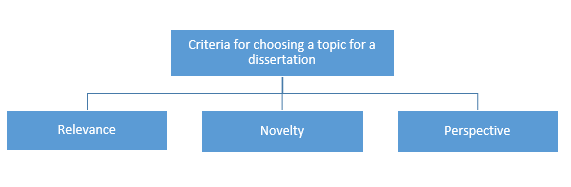
Relevance of the chosen topic – shows how important it is in modern conditions for solving current problems in the chosen area of research. The topic should be of interest to the audience in the scientific field, so it is necessary to analyse existing research and current scientific developments in the chosen field.
Novelty of the topic – we recommend choosing little-studied topics, as this will give you the opportunity to fully demonstrate your knowledge and skills.
Prospects of the topic – in this criterion, you need to understand the development trends of your chosen research area. Also ask yourself the following questions: "Is there any potential for further research in this area? Can the results open up new areas for research?". If the answers to these questions are positive, your topic is promising.
You can read more about how to choose a dissertation topic in the article "How to choose a dissertation topic?".
When formulating the title of your dissertation, you should also be guided by certain principles. Your title should be concise, interesting, meaningful, unique and understandable. Avoid general and vague statements in the title.
Structure of the PhD dissertation:
The structure of a dissertation does not depend on its type (doctoral or PhD), as well as on the profile of the work and the topic. The structure of a dissertation consists of nine key elements:
- Cover page. The title page of the dissertation contains the full name of the educational institution and its administrative area, the name of the institution or research institution, the author's surname, name and middle name, the title of the research, code, speciality, information about the supervisor, city and year of completion;
- Abstract. The abstract of the dissertation is a brief overview of the work in two languages – Ukrainian and English, which includes information about the content and results of the research, the personal contribution of the dissertator, the testing of the results and the number of scientific publications on the topic of the dissertation. The abstract is followed by keywords that reflect the main content of the research.
- Table of contents. The table of contents should include the names of the structural elements, their headings with appropriate numbering and page numbers. Sections may contain subsections, paragraphs, and subparagraphs for better organisation of the material and easier understanding by the reader. Headings in the table of contents should not be abbreviated or changed.
- List of symbols. The dissertation should include a list of conventions, symbols, units, abbreviations or terms, if they are important for understanding the text, with their decoding at the first mention. Repeated terms are not included in the list to avoid unnecessary burden.
- Introduction. In the introduction to the dissertation, you state the essence of the work, justify the relevance of the topic, formulate the purpose and objectives of the study. Indicate the methods used, what is the scientific novelty and practical significance of the work, and describe the procedure and structure of the research. The introduction in a dissertation should take up no more than 10% of the total text.The structure of the introduction is as follows:

- The main part. The main body of the dissertation includes a literature review, a description of trends and methods, a description of the study, a presentation of the results, a comparison with other studies, and a justification for further research. References to scientific works from the abstract should also be included in the list of references.
- Conclusions. The conclusions summarise the main scientific and practical results of the dissertation that have solved the scientific problem and provide information on the possible use and implementation of the results. This part takes 5-7 pages or 9-14 thousand characters.
- List of references. Here you should create a list of references of your choice, using one of the following methods: in the order of references in the text, in alphabetical order of the names of the first authors or titles, or in chronological order.
- Appendices (if necessary). The appendices may include auxiliary material necessary for the full perception of the thesis, such as mathematical proofs, tables of digital data, test reports, etc. The volume of the appendices should not exceed the volume of the thesis, and they can be placed as a separate part. The 2020 standards allow the use of both alphabetical order and sequence of mention in the thesis when placing the appendices.
What does a PhD dissertation give you?
First, it is, of course, the opportunity to obtain a PhD degree. Note that it is an opportunity, since writing a PhD dissertation does not guarantee its receipt, as it must be defended before a commission. A PhD dissertation gives its author a certain status. Such a scientific study allows degree candidates to get closer to their goal and to make themselves known in the scientific community.
Defending a PhD dissertation and obtaining a PhD degree is a prerequisite for those who want to obtain the academic titles of associate professor and senior researcher. After obtaining these academic titles, you can think about obtaining the academic title of professor. But all of this has one thing in common – your desire to teach, because they are awarded only under this condition.
One of the advantages of a PhD dissertation for a researcher is prestige and status at work. If a dissertator defends his or her qualification work written on the main topic of the work, this indicates that the dissertator is highly qualified in the chosen field. A PhD candidate also gets the opportunity to participate in international conferences, which allows him or her to make a name for themselves on a global scale.
Of course, one of the most pleasant bonuses for PhD students is salary preferences. Holders of a PhD degree are granted a bonus in the form of a 15% surcharge calculated on the official salary (wage rate).
Writing a PhD dissertation is a crucial moment in the life of a researcher. This work must meet three main parameters: relevance, practical significance and reliability. "Scientific Works" guarantees you professional assistance in writing a PhD dissertation.

